Implant Care
With so many dental implants being placed, it's sometimes hard to know what is the best way to take care of them. In our latest video, we explain how to clinically take care of these implants to ensure they last a lifetime for your patients.
Dental Hygiene Resume Elements that Matter Most
So I’ve been doing dental hygiene resumes for several years now and have found that a handful of elements matter more than others.
The feedback has been good – there’s a steady stream of clients who are reporting back to me that they get lots of compliments on the resumes I help them with.
So this week let’s go over some of the dental hygiene resume elements that seem to really matter.

Guest Author Doug Perry from Gethiredrdh.com
So I’ve been doing dental hygiene resumes for several years now and have found that a handful of elements matter more than others.
The feedback has been good – there’s a steady stream of clients who are reporting back to me that they get lots of compliments on the resumes I help them with.
So this week let’s go over some of the dental hygiene resume elements that seem to really matter.
Resume Format
There are three kinds of resumes – reverse chronological, functional and combination.
Reverse chronological is the most popular format for most professions because there’s a bigger variety of skills, responsibilities, and results from job to job. But in clinical dental hygiene there isn’t as much variation from one office to another. So to save space and reduce redundancy on your dental hygiene resume, go with a functional style – it will give you more room to really sell yourself.
A functional resume begins with your name and contact information, then a short summary about you (I call it the About Me section). Next, you create a large section that focuses on results, skills, and experiences which is a summary of your career, not just one particular job. The next two sections Work History and Education History are short and sweet – just the details like, name of employer, location, job title, and years you worked there.
If you still have room, fill it with other meaningful dental-specific information. This could be community service, participation and leadership within your local component, licensure and certification – things like that. Hobbies or personal information would be a no-no here.
Resume Length
With very few exceptions I always recommend a one-page resume. More than that just isn’t necessary and if you design it well you it can easily fit, too.
You would never put your most important, interesting, or compelling information on the second page so the content that gets you an interview is going to be found on the first page.
But there’s another reason. Whenever a dental hygiene job opening is announced, offices get dozens and dozens of applicants. Studies show employers spend less than 10 seconds reviewing each resume on the first round. So they won’t read the second page anyway. Keep your dental hygiene resume simple for you and employers and hold it to one page.
Resume Design and Color
I’ve written many times about how important it is to include a design and color scheme. It’s amazing how few people will actually do it.
Probably, it’s because text-only, black and white resumes were how they were done for so long. And it was for good reason – no one owned a typewriter or printer that could do anything different. But today we can create a beautiful resume design on our computers at home.
And now’s the time to do it – with so few take advantage of this “new” technology your resume can really pop and grab the attention of employers, ensuring you get more of their time. If you want some examples, take a look at the resume templates we sell at GetHiredRDH.
White Space
I love extra white space on a resume – it points to clean and organized (what dental hygienist doesn’t want to be thought of as clean and organized?). It’s also easier to navigate and find things for the employer receiving it.
You can easily create extra white space by changing the line spacing between lines of text from single space to 1.15 or 1.25. To do this, don’t be afraid to pull the margins of your document out a bit, too. Don’t simply use the default settings – change things around, this is a marketing document not letter so the rules for margins and spacing are much different.
Good Font
Times New Roman might be okay for a boring letter, but again this not a boring letter. Your dental hygiene resume is a marketing document designed to sell YOU.
So don’t settle. Pick a font that is different. Don’t go crazy with it (there are lots of crazy fonts out there), just keep it conservative, simple and different. One great one I like to use that comes standard with Microsoft Word is Calibri.
If you avoid Times New Roman you will stand out because most dental hygiene resumes (and I see hundreds of them) use it. It gives the appearance, whether conscious or sub-conscious, that you went above and beyond most other candidates. And being different is the name of the game, right?
Summary
Assembling the elements of a great dental hygiene resume need not intimidate you, but it does take some time. You really need to do what others won’t do by getting the format right, keeping it to one page, utilizing a design and color scheme, adding some white space and choosing the right font. Take care of those things and your opportunities for dental hygiene job interviews will increase dramatically.

Five Simple Marketing Tips that Take Less Than an Hour
Thinking about doing some marketing to help increase your office's patient base? It can be overwhelming how much time and money can be spend on marketing. Here are 5 tips that take less than an hour to get your marketing feet wet.
Feeling overwhelming with marketing your dental or dental hygiene practice? Though hours and hundreds of dollars can be spent on marketing, here a few quick tips to get you started.
1. Get rid of the “Dental Smell”. It’s hard to pin point exactly what the smell is, especially since we are so immune to it. However, one of the biggest complains of patients is the smell of the dental office. To help, try putting a mild air freshener in the front room and bathroom. You could also go latex free since the smell of latex is associated with medical procedures and pain. Or, get rid of the cold sterile since it has such a strong odor and pretty much everything that isn’t single use can be autoclaved. Air conditioning filters being changed regularly can also help limit the "dental smell".
2. Hang up diplomas and recent CE certificates. Having these on the walls show patients how educated you are and how you’ve made it a priority know the latest techniques and technologies.
3. Whiten your teeth. As the hygienist, you’re a walking billboard for the office you work for. You could even bring it up with your dentist, and maybe they’ll get on board with whitening or ortho for the entire office.
4. Make sure your paperwork looks professional. If your health history paperwork looks like its been photocopied 100 times, is grainy, or has spelling errors, your patient’s won’t take the paperwork as serious has it should be. Thorough health histories are important for dental treatment, so make sure they look as important as they are. If needed, create a new form and add your office logo at the top. Bonus points here if you add color to your forms.
5. Make sure your information on Google is correct. Now this seems simple and silly, but so many numbers and addresses are incorrect online. Since most patients get their information off the internet, it's crucial to have this vital information correct. To check, Google your office and see what presents. If the information is incorrect, contact Google to have it changed.
These are simple steps to change in the office, but will make a big impact on current and new patients.

Tried & True Ways To Empower Patients
EVERY ONE OF CANDI KIDD’S PATIENTS WILL EITHER:
1. LEAVE WITH A NEW IDEA OR TECHNIQUE
And/Or
2. WILL LEAVE WITH A NEW PRODUCT
I think above EVERYTHING in dental hygiene- Oral Hygiene Education is by far my FAVORITE thing to talk about. Unfortunately, no one is willing to pay me to just talk… ;) I, like everyone else, don’t have a lot of time for OHE so I’ve had to, through trial and error, make sure My OHE is focused and that I’m discussing the right things at the right time and in a way that will make sure my patients feel empowered and not guilty! I have a little rule that I try to live by,
EVERY ONE OF CANDI KIDD’S PATIENTS WILL EITHER:
1. LEAVE WITH A NEW IDEA OR TECHNIQUE
And/Or
2. WILL LEAVE WITH A NEW PRODUCT
The CRITICAL time to open up the brushing and flossing conversation is BEFORE you are in their mouth. This allows you to know if you need to focus on adjusting the technique of an already existing habit or gaining a habit. I used to probe and then talk to a patient about how they need to floss only for the patient to be defensive because they were flossing, just not effectively. Or I would discuss brushing and flossing technique to someone that doesn’t do either very regularly, they needed to gain the habit.
When I’m taking radiographs I open up the conversation like this. “Tell me about your brushing habits? How often do you brush? Do you use a manual or electric?” (make sure if they say electric that they aren’t talking about a spin brush.) “Tell me about how you clean in-between your teeth? Do you use floss or toothpicks? How often?” If they have good habits I will wait until after I’ve probed and then see if their technique needs any “adjustments”. If they ARE brushing and cleaning in-between regularly but still have bleeding, inflammation and plaque I will usually follow the, “COMPLIMENT, CORRECT, COMPLIMENT” rule.
I will usually say something like: “John, it looks like you have a really great habit of brushing (compliment) I’m going to “ADJUST” the way you’re holding your toothbrush a tiny bit to make you more effective (correction). You’re so proactive that I’m sure that we will see good results. I found that saying words like “adjusting” or “tweaking” don’t make the patient feel dumb! I even had a dentist tell me that with all of the “adjustments” I do that I should have been a chiropractor!! Ha!
The second part is gaining the habit! Oral hygiene is one of those tricky things. Usually people KNOW they should be brushing and cleaning in-between their teeth. The actual doing is the hard part. I have had the MOST success with teaching something called “Tiny Habits” created from famous habit researcher BJ Fogg. PLEASE WATCH THIS VIDEO to fully understand it.
I might say something to my patients like: “You have a great habit of brushing (compliment). You have “X” amount of bleeding areas between your teeth. Most people know how to clean in-between the teeth but it's just gaining the habit. I want to focus on just gaining the habit. A lot of my patients have been successful using tiny habits (social pressure helps!)
Then I go on and explain tiny habits. A tiny habit is where you have an ANCHOR->TINY HABIT-> REWARD. So if the patient has the habit of brushing (ANCHOR), then I would have them floss one tooth, and then say “I’m awesome”. Patients laugh when you explain this . I always tell them that it's not about flossing all 28 teeth but doing such a tiny thing that they go from brushing and then flossing automatically!! Don’t let them floss more than one tooth to start off with!!

The last part is to REINFORCE! Either have a hand out or sometimes I like to put a sticky note in their bag that says their name, the products or idea we discussed, and then something on the lines of “have fun on your vacation to California!” Candi Kidd, RDH
It's something small that goes a long way!!
Cocofloss Winner
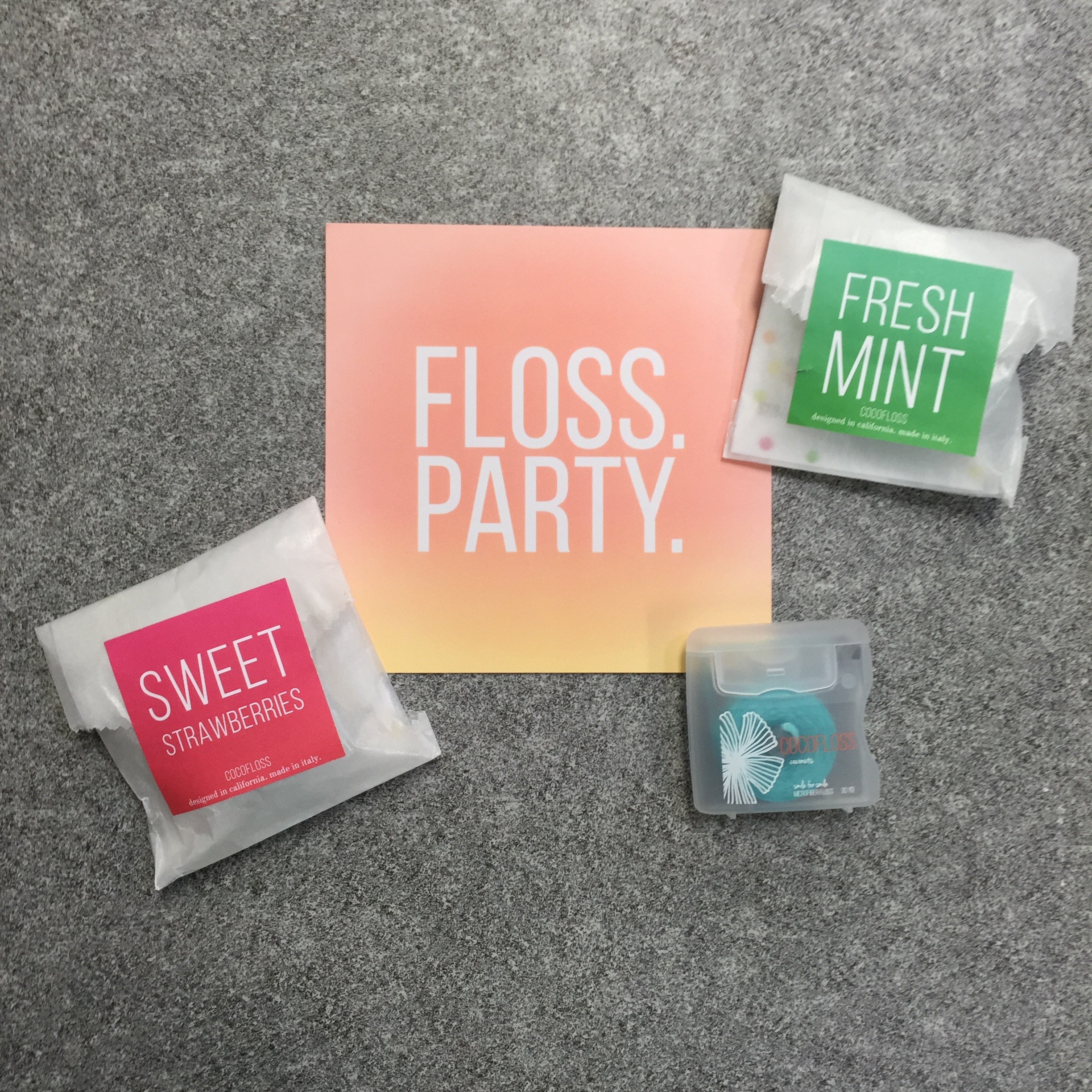
The winner of the Cocofloss in announced!
Thanks to everyone for entering our latest giveaway! The winner is:

Please email us at hygieneedge.com with your info so we can get you your prize!

New Floss Spotlight-COCOFLOSS
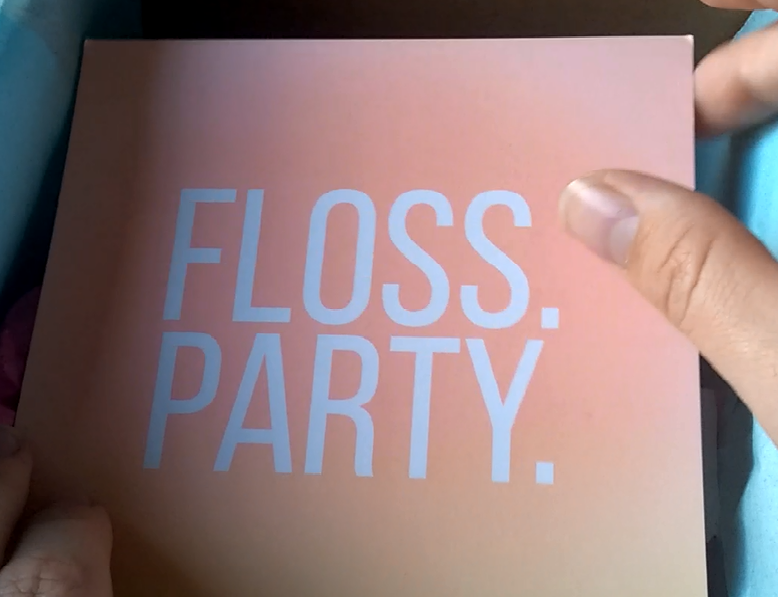
Cocobox is on a mission to transform flossing into a more rewarding and delightful experience. The company’s first product, Cocofloss, is a soft, textured dental floss that is infused with flavor and has the ability to remove bacterial plaque. Patients and professionals love, and even crave, the squeaky, after-Cocofloss clean. They also love the Caribbean blue Cocofloss color that contrasts clearly with plaque removed. Patients feel and see progress flossing with Cocofloss.
Cocofloss is available via subscription to help patients build healthier habits. Flossing daily, patients should finish their 32-yard Cocofloss in two months. Cocobox also offers a variety of educational articles on oral hygiene with fresh, colorful illustrations. Topics range from “How to Floss” to “Those Stubborn Stains Explained.”
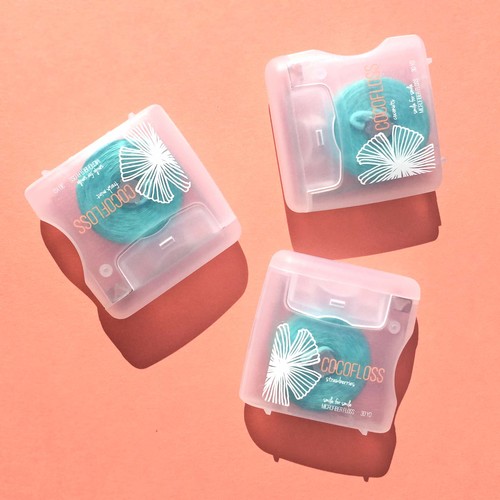
Dr. Chrystle Cu founded Cocofloss with her sister, Catherine, to inspire people to take better care of their smiles. As a doctor who is passionate about prevention, Dr. Cu hopes to inspire her friends and patients to floss daily so that they can keep their “teeth for life” (#teeth4lyfe). The company has also partnered with the non-profit organization Philos Health to provide oral health supplies to kids in Bohol, Philippines where over 80% of children have untreated cavities.
Cocobox invites everyone to join the “floss party revolution” and to keep their teeth for life.
Check out our helpful floss tips video to see Cocofloss in action.
To win your own Cocofloss to try out, comment below on your current favorite floss or interdental aid!
Ways To Stay Positive In Dental Hygiene School
I look back on my first week of dental hygiene school with a sort of fond envy. I was so full of excitement and energy, two things which are hard to come across as a second year dental hygiene student. I will admit that the stress and demand of school has taken a toll on my sanity and my social life, but I’ve found little ways to cope and keep my chin up. Here are a few:
Hygiene Edge is excited to announce the winner of our 1st Student Essay Contest- Taylor Robell! Taylor is currently a second year dental hygiene student at Fortis College in Phoenix, Arizona. We've included her essay "Ways to Say Positive in Dental Hygiene School" below for both students and current hygienists to learn from.
I look back on my first week of dental hygiene school with a sort of fond envy. I was so full of excitement and energy, two things which are hard to come across as a second year dental hygiene student. I will admit that the stress and demand of school has taken a toll on my sanity and my social life, but I’ve found little ways to cope and keep my chin up:
1. Do something simple and fun. Doing small things that interest you has been proven to help boost positivity and productivity. It’s science! I like to do small crafts and DIY projects that I can use around the house. Online shops like Darby Smart have tons of simple and easy project ideas. If you’re on a budget, Do it on a Dime is a great YouTube channel for projects using items found at the dollar store.
2. Start a motivational Pinterest board. It might sound cheesy, but never underestimate the power of Pinterest. There are tons of motivational quotes and stories on Pinterest that you can reference. There are also plenty of dental hygiene memes which are good for a laugh when you need it most!
3. Set short-term goals. We all know that graduating and passing boards is the end goal, but long-term goals don’t do much for present day positivity. It doesn’t have to be anything major to have a big impact. My current goal is to walk 10,000 steps a day. Setting measurable and attainable goals can be huge for your happiness.
4. Start a thought journal. One of the things I struggled with the most initially was bringing my stress home and letting it rub off on my family. Instead of venting about how miserable I was at school that day, I write it down and let it exist only on the pages of my journal. It’s made me a happier person and helped my relationships as well.
5. Try a new recipe. Think back to anatomy and physiology and release those endorphins by eating something delicious! The All Recipes app is a great tool for discovering new recipes. The “Dinner Spinner” feature allows you to select recipes that take a certain amount of time. It’s perfect for busy college students who don’t have hours to spend making food!
6. Build a support system. The one redeeming factor about dental hygiene school is that you’re not alone. Simply surrounding yourself with like-minded people can be a gratifying tool for coping with stress. If you haven’t already, get together with classmates outside of school. Try new things and enjoy the moment you’re in.
7. Do something nice for someone else. One thing that never fails to recharge my passion for life is helping others. But you don’t have to donate hours of your time at the local food bank to accomplish this. Simply buy a stranger’s coffee or help an elderly woman with her groceries and I promise you’ll feel the difference almost instantly.
8. Remember that it’s okay to ask for help. It is so important to constantly evaluate your well-being and mental health. Dental hygiene school can be a major life-changing event, so know the symptoms of anxiety and depression. If you feel that way, you’re not alone. Roughly 30% of college students report feeling so depressed that it’s difficult to function. Know the signs and know when to get help.
It’s no secret that dental hygiene school is a constant battle. But with the right tools and an army of support, you won’t have to fight alone!
Thank you to all the students who entered! We loved each essay and how personal and pertinent the topic is to current dental hygiene students.

SOAP-TOPE Notes
The SOAP Note is a format of writing medical records that started in physician’s offices, but was quickly adopted into the dental field. Do you work in a practice that requires using the SOAP Note technique? If not, give it a try. Let's break it down.
The SOAP Note is a format of writing medical records that started in physician’s offices, but was quickly adopted into the dental field. Do you work in a practice that requires using the SOAP Note technique? If not, give it a try. Let's break it down.
SOAP is an acronym- Subjective, Objective, Assessment, and Plan. This system was created to help prevent charting mistakes or information from being left out. Just like each patient is unique, each chart in unique with information and length of notes.
Here is an example what each letter of SOAP includes:
S- Subjective
This section starts with the chief concern of the patient and any reported symptoms, such as when the pain started, how long it’s been happening, when and where the pain happens, etc. This section also includes health history notes of a new patient and health history updates on current patients.
O- Objective
This next section tells about the patients current health- blood pressure reading, extra and intra oral exam findings, which radiographs were exposed and findings based on them, any mobility or furcations, any symptoms to in office testing like percussion or cold tests, gingival descriptions, and a brief description of periodontal probing findings.
A- Assessment
This is where the dental hygiene diagnosis is recorded based on all previous findings.
P- Plan
Now we finish off with the treatment plan that needs to be carried out. In dental hygiene this could be completed at that day or over several appointments.
If you decide to use SOAP Note technique or if your office requires it, I’d recommend adding a few more letters to the acronym. Since hygiene appointments include so much information, use SOAP-TOPE. It’s definitely not as catchy, but it includes a little more information that we need.
T-Treatment
In hygiene, many appointments have us diagnosing, treatment planning, starting and finishing treatment all in the same day. Here you would include what treatments were completed at that appointment- full mouth prophy, fluoride, radiographs, and periodontal debridement quads with what anesthetic and how much was used.
O- Oral Hygiene Education
Here we would chart current habits, goals made, products recommended, and techniques taught at that appointment. Explanation of periodontal health and the importance of regular recall appointments would be written here too.
P- Personal Notes
Jot down just a few notes of what you talked about with your patient that appointment. It could be an upcoming trip, work or school information, family happenings, or important events coming up. This will make the next appointment in 6 months more personal for both the patient and you. Building meaningful relationships with patients is one of the best parts of dental hygiene!
E- Exam
Chart everything the dentist talks about with the patient. And I mean EVERYTHING! Of course, we always chart restorations that need to be completed, but be sure to chart conversations on whitening, night guards, headaches, areas to be watched, or any other possible treatment options that could be brought up in the future.
Real Life Example of SOAP-TOPE:
S: Patient is interested in whitening options. No toothaches or sensitivity today.
0: No changes to medical history per patient. Blood Pressure: 124/74. Healthy bone levels visible on radiographs, with generalized 1-3mm pocketing (see perio chart). Localized BOP on buccal of 2, 3, and 4. No mobility or furcations present.
A: Generalized healthy with localized marginal gingivitis due to pt missing brushing area.
P: Adult prophy, FL2 Tray
T: Adult prophy hand scale only- patient did not tolerate ultrasonic well. Polish with fine paste. Floss. APF FL2 tray placed for 1 minute with post op instructions of no eating or drinking for 30 mins. Pt agreed to post op ins.
O: Brush 1x day. Floss 1x day. Explained to patient area on buccal of 2, 3 and 4 that presented with heavy biofilm. Recommended pt close partially to brush that area, or switch to a smaller head toothbrush. Goal: Start brushing on the buccal of Quad 1 each time he brushes. Explained whitening procedures and post op sensitivity that may occur. Recommended at home FL2 treatment of Clinpro 5000 to prevent sensitivity. Disp: Soft TB, Glide Floss, Sensodyne Samples
P: Pt is getting married next month which is why he is interested in whitening. Wedding will be held at his grandparent’s farm. Met his fiancé in college.
E: Per Dr. Harris: Decay present #3-O, #14-DO. Explained Zoom Whitening to patient, procedure, cost, and post op pain and instructions.
Great charting habits will make your life, your dentist’s life, and your office manager’s life flow much smoother. Try out the SOAP-TOPE charting method and see how it works for you!
H.E.L.P! Hygiene Ergonomics, Loving Practice
Hygiene Edge is excited to announce a guest contributor- Willi Nixon Fuller, RDH. She has an amazing experience of how ergonomics changed her way of practicing and we're excited to have her share her secrets.
Hygiene Edge is excited to announce a guest contributor- Willi Nixon Fuller, RDH. She has an amazing experience of how ergonomics changed her way of practicing and we're excited to have her share her secrets.
Let me first tell you about my personal story, and passion of ergonomics. I have been practicing as a hygienist for a short 4 years, and I've unfortunately learned the hard way how important ergonomics are to prolonging my career.
In my first year of practice, I experienced:
- Dislocation of the 3rd rib from the sternum
- Curving in my shoulders
- Midback pain
- A pulled psoas muscles lining my spine
All of these injuries manifested themselves while I was doing something else: skiing, lifting something while turning, running, ect. Each injury was very slow to heal because it coincidentally was the exact muscles I use to turn towards my instrument tray while working on a patient, or the rib that was affected most by my right hand instrumentation. I soon realized that my repetitive motions in the office are what caused my injuries, not the other way around.
Over the next 3 years, I worked hard to heal my body and keep it healthy through a combination of exercise and muscle therapy. I recognized that in order to have a long and enjoyable career, I needed to invest time and attention to my body.
How does it feel?
60% of hygienists complain of neck pain, which shoulder pain close behind. Over a third suffer from lower back pain, while 27% have mid to upper back pain, and pain in their hands. Work related pain can extend to the hip flexor muscle (psoas major) lining the inner lower spine, elbow, or wrist pain from tendonitis, and rounding of the shoulders. Whether it is continuous back pain or musculoskeletal pain, surveys show around 78% of hygienists experience work related pain on a fairly regular basis.
I Feel Fine
What are the results of chronic occupational pain?
- Dissatisfaction with daily tasks
- Discomfort at work and at home
- Shortened career
- Shortened work days
- Slower at completing hygiene duties
- Unable to continue physical hobbies
All I've Got To Do
So, is it hopeless? Should we all just recognize that we chose the wrong career for having a strong, comfortable body? Absolutely not. Let's start with a checklist of things we can do to improve ergonomics.
1. Invest in loupes and a light- they will help you sit up straight.
2. Use your loupes and light with every patient.
3. Begin a daily exercise routine, focusing on core and back strength.
4. Stretch 10 minutes before and after every work day.
5. Stretch for 1 minute between patients.
6. Lower your shoulders.
7. Use indirect vision when necessary rather than leaning/twisting.
8. Ask your patient to turn their head for visibility. They don't mind!
9. Visit the chiropractor once a month- don't wait for something to hurt first.
10. Find a massage therapist and go once a month.
I Want to Hold Your Hand
I can't stress enough how these simple changes in my daily practice changed my life. If there was a way I could check up on every hygienist and hold them responsible for taking care of their body, I'd do it. If there is ANY take away form this, let it be:
1. Find a massage therapist with a focus in deep tissue muscular therapy, and get a massage once a month. Ask a chiropractor or physical therapist for references of a good massage therapist. I cannot emphasize enough how important massage is. It will cost about $50 a month, but it will allow you to work more hours in comfort, for a much longer career. IT'S WORTH IT.
2. Stretch and Exercise regularly.
Carry That Weight
Back exercises to be done 3x per week:
- Dead lift 15 sets of 5 reps
- Dead row 15 sets of 5 reps
- Clean and press 5 sets of 3
- Seated row 15 sets of 5 reps
Yoga poses to strengthen and stretch- 10 minutes before and after every work day
- Downward dog
- Cobra or up dog
- Child's pose
- Triangle pose
- Cat/cow sequence
- Forward Fold
1 minute stretch between patients- Any type of stretch that opens the chest, the hips, or elongates the forearm muscles. 30 seconds on each side. Alternate focus area between patients.

Willi Nixon Fuller, RDH- I’ve been practicing as a Dental Hygienist since 2011 with Mountain View Dental Care - general dentistry. In addition to my role as a dental hygienist, I am the marketing director for my office. Along with maximizing SEO, I created our interactive website and connect with patients on Facebook, Twitter, Google Plus, and our Blog to provide them with new information about dentistry.
I'm happiest when I'm exploring Salt Lake’s beautiful canyons through running, hiking, and skiing.

4 Key Strategies for a Successful Dental Hygiene Salary Negotiation
Doug Perry from the site gethiredrdh.com talks about negotiating your wage and benefits. Salary negotiation can seem a little scary and worrisome, but if you have done your homework, have a plan, get the timing right, and engage in a thoughtful conversation over it you should feel confident.

Author Doug Perry gethiredrdh.com
Salary negotiation, whether you are dental hygienist or a school teacher, makes everyone a little squeamish, and yet we use many of the basic principles in the normal course of a day without even realizing it.
So whether you are negotiating a better salary with your current boss or looking to improve an offer from a new employer, it may not be as tough or foreign as you think.
Here are four steps to a successful dental hygiene salary negotiation:
1. Decide It
Studies show women are more reluctant than men to negotiate a salary. So a dental hygienist (more than 95% of all hygienists are women) on the fence should just do it. Obviously, there are instances when you wouldn’t do it that’s why I said “on the fence.” But if you are undecided then go for it.
An annual review of performance and salary may not be something your employer prefers or agrees to. But certainly, if you have not received a raise in more than two or three years you really owe it to yourself to approach the subject with your boss if for no other reason than to remind them of the value you bring to the practice.
2. Plan It
Salary negotiation isn’t something you do without some research and planning. You will increase your odds of success if you take your time to develop a clear and focused plan. There are lots of factors to consider such as, the average wage in your area, what kinds of successes (or failings) you have had recently, how much experience you have, patient load, economic conditions for the employer, and other benefits that might interest you along with or in place of a simple wage increase.
Do some research and have a clear, intentional plan and goals (both short and long-term) that are part of it. At GetHiredRDH.com, I have posted historical dental hygiene salary data for every state in the US – this along with other resources, are valuable in planning your negotiation strategy.
3. Time It
The old mantra “timing is everything” is very true for salary negotiation. Let’s face it, as nice as your boss or new boss may seem, everyone has a bad day and even if you have carefully planned out your moment for negotiating, you may need to be prepared to retreat for a bit to improve your odds.
There are other considerations associated with timing, such as if the office recently gave you a bonus – that’s probably a bad time. Or, if the employer just invested in a bunch in new equipment (hoping to improve or maintain patient retention) – probably not ideal either.
If you are only one of several candidates for the job, don’t even get into salary discussions unless asked. And if asked, you can give them a range, but keep it vague or wide.
Most employers want to know if they are in the ballpark with you on it, so one way is to just simply respond pleasantly with, “I’m aware of what most hygienists make in this area and am comfortable that we can agree on an appropriate figure. But, I’m interested in sharing with you what I can do to become an asset to the practice first.”
4. Negotiate It
You’ve decided to do it, you have a plan, and the timing is right. Now what?
Salary negotiation is all about win-win. If either you or the employer feels like they tipped too far in one direction, one of you won’t be happy and that’s not a good long-term position to be in (and it usually results in parting ways sooner rather than later).
So, yes, you can and should expect to get something more than your offer or what you currently make, but they have to feel good about it, too.
Win-win can mean lots of different things, some of which can be psychological. Maybe an employer is glad they only have to give up a $1/hour more to you to keep you around because you have bonded with the patients.
Or maybe, you have won by drawing attention to the fact that you feel underpaid and there’s now a solid plan in place for regular salary adjustments going forward (even if not right now). Those are victories and even if they seem small will lead to more victories in the future for both of you.
So, let’s get down to a few simple tactics that will help you achieve a win for yourself.
Before you make your proposed amount, and from your research, be ready to share with them the “why” – three or four specific things you have done to bring value to practice. Share actual examples of the time a certain patient raved about their experience with you, or how you were able to save the practice money.
Always share these before you give them your request. This is true for a job offer, too. Reiterate the things that make you value and specific examples.
Ask for a little more than what you would be happy with. That gives you room to move on it. Employers want to know an employee is flexible – it’s a good omen for them coming to an agreement with you that is acceptable for both.
Have several concessions ready to go. These are other things such as some paid holidays or sick days, a bonus program, or maybe it’s paid training or association membership fees. Just know ahead of time some things that may not be quite as good as a salary bump, but that will make life better for you and that might be easier for the employer to accept.
Don’t be afraid to counter their offer. You don’t want to go back and forth more than a few times, but it’s generally acceptable to start with the big ask, then work your way down to smaller things (the concessions).
Give their final offer space to breath. What I mean by that is once they give you their final offer, pause – make it look like you are thinking. Sometimes that little pause (of even a few awkward seconds) can actually compel them to offer a little more on the spot.
Then, after you have paused, tell them you would like to consider it and come back to them in say 24 hours. Most employers will agree to that. But that space gives you time to properly consider it and it actually causes them to re-think their position as well and sometimes they will come back prepared to offer a little more still.
And if all you do is come back and agree to their final offer – they will feel as though they got a big win (and that will help you in the future).
Final Advice
Always maintain a high level of professionalism and even give them a “thank you” note when it’s settled – even if you didn’t get as much as you wanted. It also doesn’t hurt to request it in writing, particularly for promises that are made in the future (future reviews or increases based on some measurement).
Salary negotiation can seem a little scary and worrisome, but if you have done your homework, have a plan, get the timing right, and engage in a thoughtful conversation over it you should feel confident.
_______________________________________________________________________________