

Why Instrument Shape and Design Matter in Dental Hygiene Care
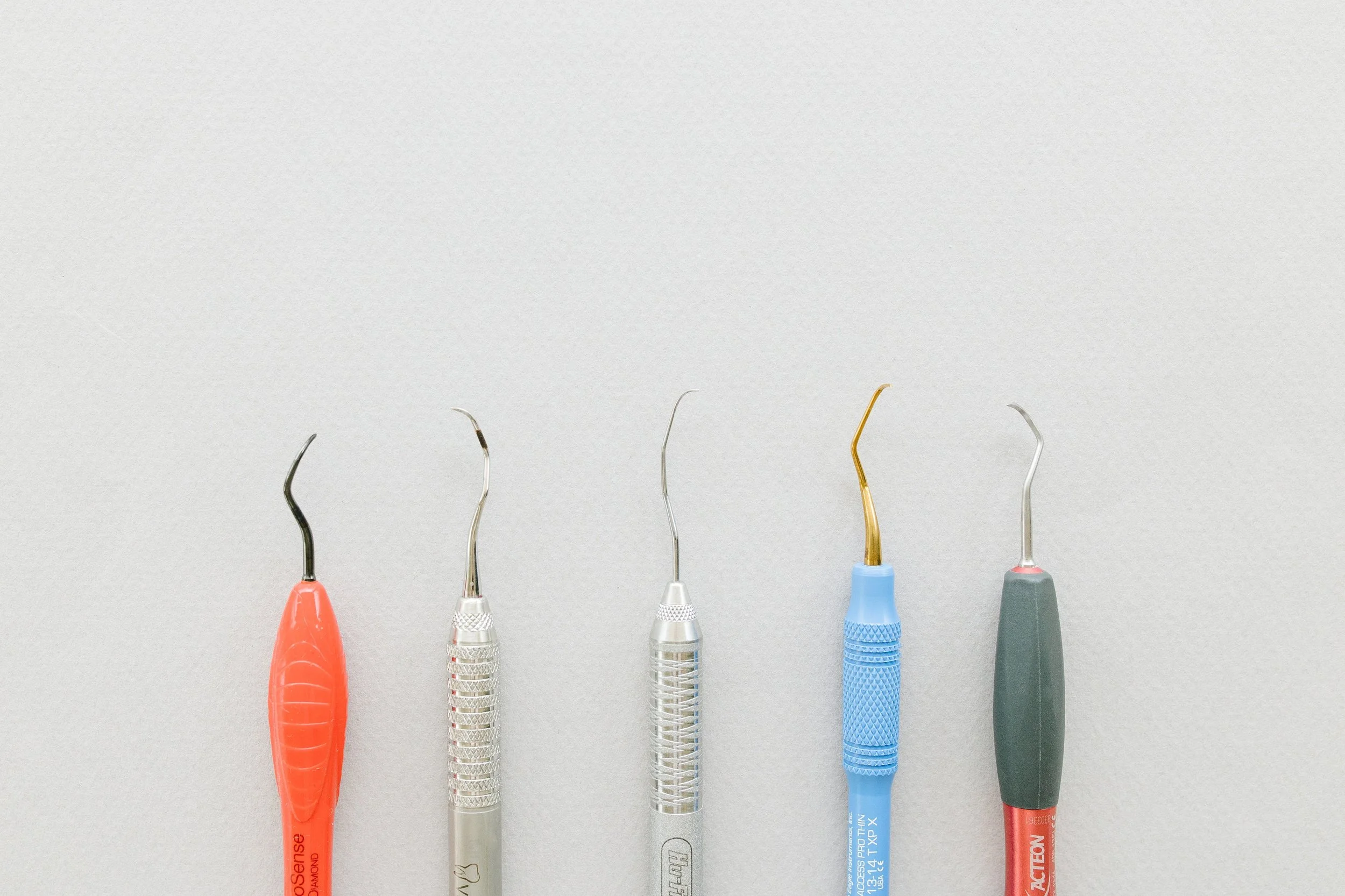
In dental hygiene, the instruments we hold in our hands every day are far more than pieces of metal and resin. Instrument shape, blade design, shank angulation, handle diameter, and cutting edge configuration all directly influence clinical outcomes, patient comfort, ergonomics, efficiency, and even long-term clinician health. Understanding the “why” behind instrument design allows dental hygienists to make more intentional decisions in patient care rather than simply reaching for instruments out of habit.
Every dental hygiene instrument is engineered for a specific function. Gracey curettes, universal curettes, sickle scalers, and files each have unique design characteristics intended for particular areas of the mouth and types of deposits.
When clinicians fail to understand those design principles, it can lead to:
Burnished calculus
Incomplete deposit removal
Tissue trauma
Reduced clinician efficiency
Increased hand fatigue and musculoskeletal strain
Poor patient outcomes
An instrument is only as effective as the clinician’s understanding of its design.
Working End
The working end is where science and clinical performance truly meet.
Sickle scalers feature a pointed tip and triangular cross-section designed specifically for supragingival calculus removal. Their rigid design provides excellent strength for heavy deposits, especially in interproximal areas.
However, because of the pointed tip, they are not intended for subgingival use. Using a sickle scaler below the gingival margin can traumatize soft tissue and create unnecessary discomfort for patients.
Universal curettes are designed with a blade face positioned at a 90-degree angle to the terminal shank, allowing both cutting edges to be used. These instruments provide versatility and are commonly used for subgingival calculus removal.
Their adaptability makes them excellent “workhorse” instruments, but they may lack the area-specific precision of Gracey curettes.
Area-specific (Gracey) curettes are designed with only one lower cutting edge used for instrumentation. The offset blade and carefully engineered shank angulations allow adaptation to specific tooth surfaces with less tissue trauma and more precise subgingival debridement.
For example- the Gracey 11/12 instrument is designed for mesial surfaces of posterior teeth, the Gracey 13/14 instrument is designed for distal surfaces. Using the correct Gracey design improves adaptation, lateral pressure control, and deposit removal efficiency.
Shank Design
One of the most overlooked yet clinically important aspects of instrument selection is shank design. The terminal shank determines access, adaptation, tissue displacement, visibility, and fulcrum stability/ A poorly selected shank design can prevent proper adaptation entirely.
Rigid shanks are ideal for tenacious calculus because they transmit greater pressure without bending. Flexible shanks, while gentler, may be more appropriate for light deposit removal and fine root debridement.Selecting the incorrect rigidity may lead to clinician fatigue or ineffective calculus removal.
Dental hygiene instrumentation is both a science and an art. Every curve, angulation, blade shape, and handle design exists for a reason. By deepening our understanding of instrument anatomy and engineering, we improve our ability to provide precise, comfortable, and effective patient care.
Instrument mastery is not about owning more instruments. It is about understanding how design influences adaptation, access, ergonomics, and clinical outcomes.
The better we understand our instruments, the better we can serve our patients—and protect our own longevity in the profession.